


With a total financing of 137 million US dollars and cooperation with Nvidia, why does this exoskeleton robot company rely on it?
Time: 2025-08-16 11:02:50
Click:
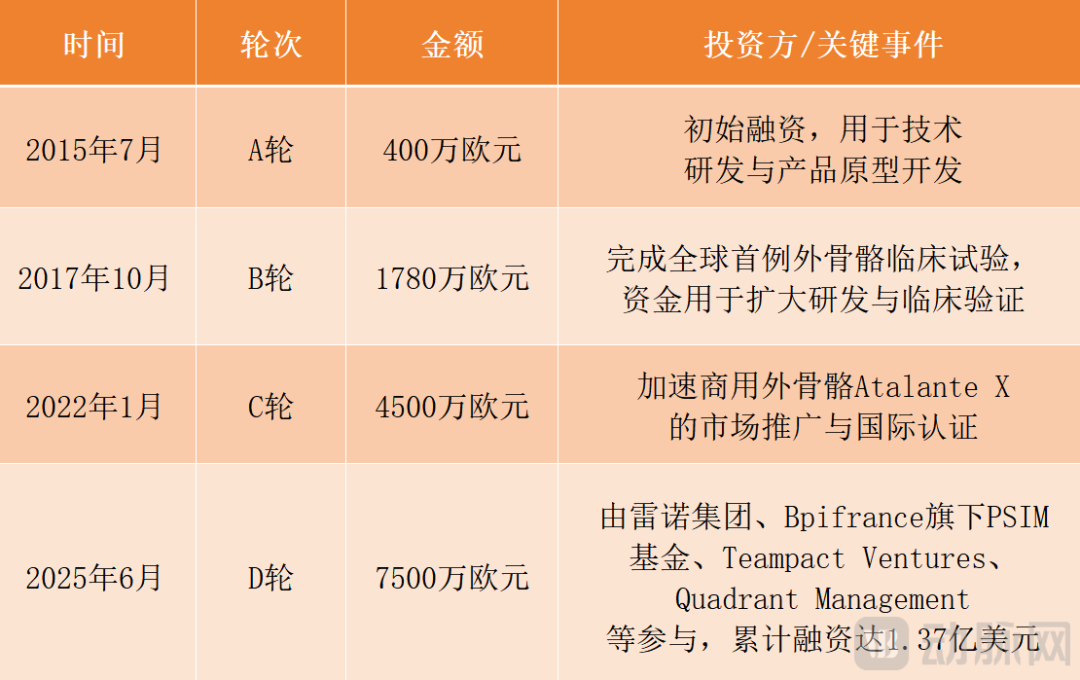
On June 11, 2025, French exoskeleton robot company Wandercraft announced the completion of a $75 million Series D funding round, with participation from institutions such as Renault Group, PSIM Fund under BpiFrance, Teampact Ventures, and Quadrant Management.
The funds will be used to promote the commercialization of its core product Eve system, international deployment of Atalante X, and mass production validation of Calvin-40.
Since its establishment in 2012, Wandercraft has built a funding chain for technology research and market expansion through multiple rounds of financing, with a cumulative financing amount of $137 million
01
Development history of exoskeleton robots: from laboratory to commercialization, from military to multiple fields
Exoskeleton robot is a wearable intelligent mechanical device, inspired by the exoskeleton structure of insects in biology. Through the collaboration of technologies such as motors, sensors, and control systems, it provides strength support similar to that of insect and shell animal exoskeletons, enhancing or restoring human mobility.
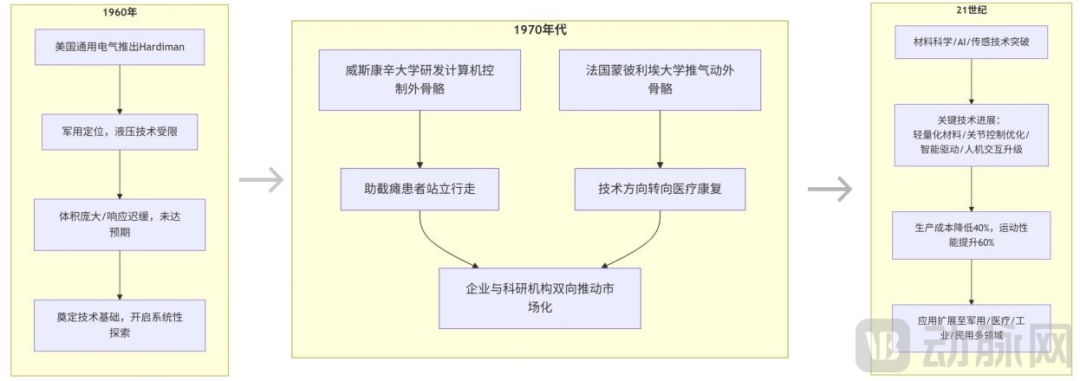
外骨骼机器人发展历程一览图
From 1960, General Electric of the United States launched the world's first wearable single soldier device, the Hardiman, attempting to replace human hands with robotic arms, to the 1970s when exoskeleton robots turned to the medical field to help paraplegic patients stand and walk, gradually moving out of the laboratory towards marketization, and then entering the 21st century, exoskeleton related technologies achieved important breakthroughs, and the exoskeleton robot industry continued to develop and break through. The product application scope gradually expanded to multiple fields such as military, medical, civilian, and industrial.
In this wave of technology, founders Matthieu Masselin, Nicolas Simon, and Alexandre Boulanger keenly captured the gap in the global rehabilitation market and understood the urgent needs of patients with mobility disorders - only a few of the nearly 20 million spinal cord injury patients worldwide have access to effective rehabilitation treatment equipment support. Wandercraft was born in Paris in 2012.
After more than a decade of hard work, Wandercraft, with the corporate vision of 'enabling wheelchair users to regain their walking ability,' has gradually developed into a company that holds over 30 core patents today. It has made breakthroughs in fields such as dynamic balance control and gait neural network modeling, and has grown from a startup to a benchmark in the exoskeleton industry.
02
Powered by AI, three product lines targeting healthcare, consumer, and industrial sectors
Currently, Wandercraft has successfully developed three exoskeleton robots: Atalante X, Eve, and Calvin-40, targeting the medical, consumer, and industrial markets respectively.
● Atalante X: Designed specifically for patients with mobility disorders, with a small number of certifications from both Europe and the United States
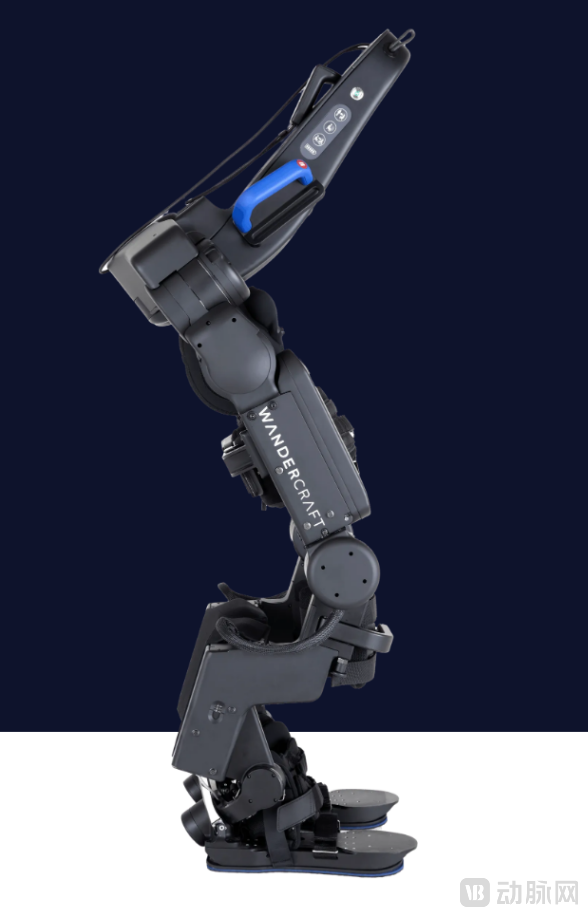
Atalante X model image from: Wandercraft official website
Atalante X is a self balancing exoskeleton system designed for rehabilitation medical institutions, specifically for patients with movement disorders such as spinal cord injury, stroke, multiple sclerosis, and Parkinson's disease. Through the combination of ergonomic design and cutting-edge technology, it helps patients with movement disorders to safely carry out rehabilitation training. Specifically, it has the following unique advantages:
Intelligent self balancing system, suitable for different patients. The self balancing system carried by Atalante X adopts high-precision sensors and feedback mechanisms to monitor human movements and changes in center of gravity in real time. Combined with the ZMP (Zero Moment Point) algorithm, it achieves dynamic balance control and ensures that patients can stand independently without crutches. The device is also equipped with Early Gait mode, designed with small steps of 5-10 centimeters and customizable walking parameters to help severely gait impaired individuals quickly initiate the rehabilitation process.
Integrated design, 12 degrees of freedom biomimetic drive. The Atalante X features a 12 degree of freedom electric drive system that accurately simulates the complex ankle joint movements in human gait. Coupled with sensor feedback and dynamic balance algorithms, it provides a more natural and smooth walking experience. In addition, the integrated structural design makes the installation and wearing process of Atalante X simple and convenient, which can adapt to patients with spinal cord injuries and strokes of different body types, while meeting various rehabilitation needs such as lower limb training, posture correction, and upper limb strengthening.
Dynamic auxiliary intensity adjustment, real-time tracking of patient data. Atalante X has symmetrical and asymmetrical adjustable assistance functions, which can flexibly adjust the assistance intensity according to the patient's rehabilitation progress, gradually reducing the assistance intensity from early complete mechanical assistance. The system can also automatically generate optimized walking kinematic data based on the patient's body shape and abilities. Doctors can track step size, joint angles, and other data in real time through the WanderTouch device to grasp the patient's functional recovery status.
In terms of applicability, Atalante X is suitable for hemiplegic patients aged 18 and above with complete/incomplete paraplegia, cerebrovascular accidents, and other brain injuries in the European Union; Suitable for patients with cerebral vascular accident hemiplegia and T5-L5 spinal cord injury in the United States. However, it should be noted that this device is not suitable for scenarios such as sports or climbing stairs.
In addition, Atalante X obtained European CE certification in 2019, was approved by the FDA for stroke rehabilitation in early 2023, and was further approved for spinal cord injury rehabilitation in February 2024, becoming one of the few rehabilitation exoskeletons with both European and American certifications.
At present, the system has been deployed on four continents worldwide and has entered more than 100 rehabilitation centers, including well-known institutions such as Kessler Foundation in the United States, Villa Beretta Neurorehabilitation Center in Italy, and Sch ö n Klinik in Germany. It has served over 2500 patients and helped them complete more than 14 million steps of walking training.
Eve: A convenient home care robot has been deployed for the first pilot in New York
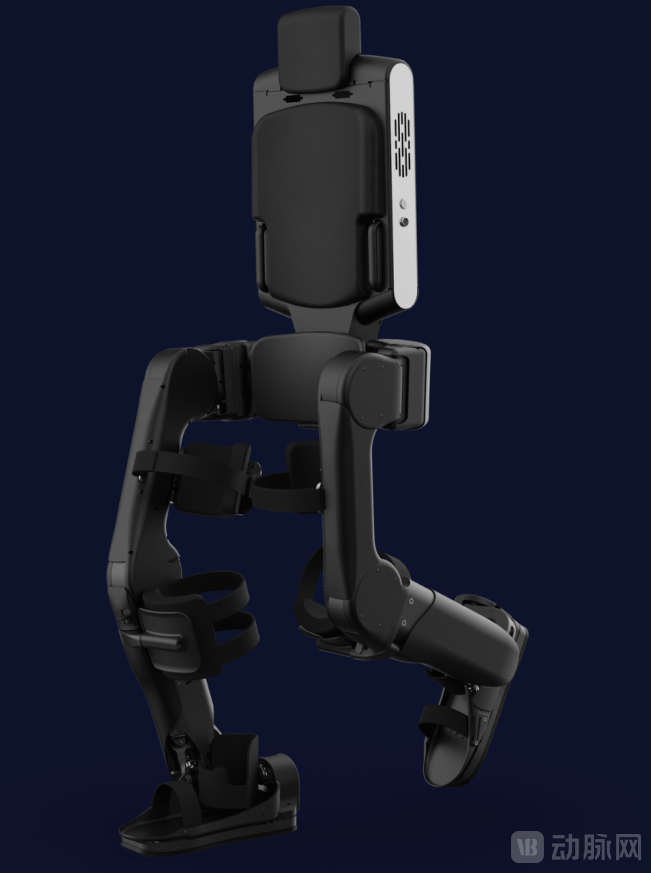
Eve模型图 来自:Wandercraft官网
Eve, which targets the rehabilitation scene after discharge, is a strategic product of Wandercraft that extends from medical institutions to home settings. The device is equipped with edge computing chips based on NVIDIA Jetson platform, and integrates the neural network model developed by the company, which can simulate natural gait and dynamic balance response. It adopts a self balancing structure design, allowing users to move independently without the need for crutches. The whole machine is lightweight, easy to wear and operate, and suitable for post discharge rehabilitation continuation or as a wheelchair replacement device.
At present, Eve is in the clinical trial stage, mainly recruiting patients with T6 and above spinal cord injuries, basic upper limb control, and health companionship. The focus is on verifying the stability of the device in daily home environments, wearing tolerance, and user subjective feedback. According to clinical progress, Eve plans to launch in the US market in 2026 and has already established the first deployment pilot center 'Walk in New York' in New York.
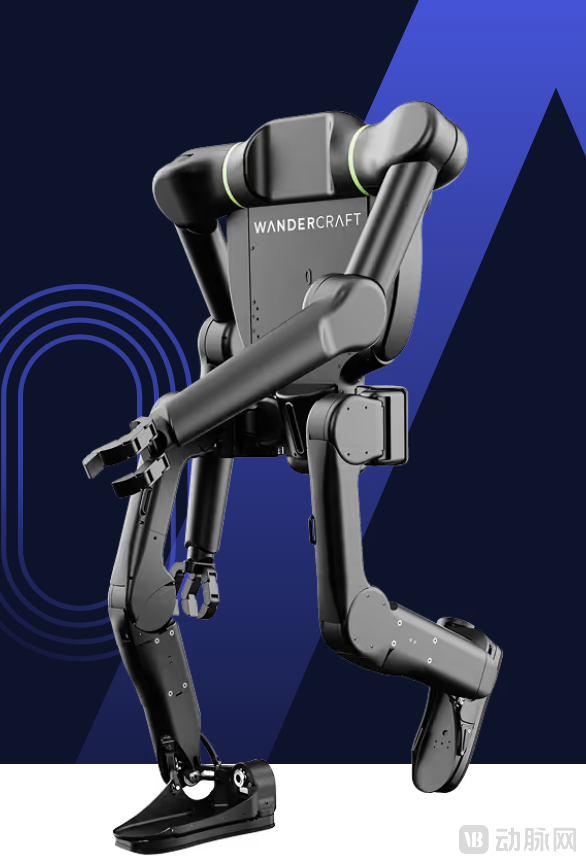
Calvin -40: The first humanoid robot suitable for high-risk industrial labor
Calvin-40 model image from: Wandercraft official website
Calvin-40 is the first humanoid robot developed by Wandercraft, specifically designed for repetitive or high-risk physical labor tasks in industrial settings. This robot inherits the gait control architecture of the Atalante platform, integrates NVIDIA Isaac GR00T and Jetson control systems, and has full body self balancing and autonomous navigation capabilities. Its prototype development cycle is only 40 days, and it is planned to complete the first deployment at the Renault Group factory by the end of 2025. It will mainly be used to support manual positions in the automotive manufacturing process to reduce the risk of musculoskeletal injuries for operators. Subsequent versions are expected to expand to the field of care oriented service robots.
It can be seen that these three product lines constitute the complete technology map of Wandercraft for the three major fields of medical, consumer, and industrial: Atalante X consolidates the foundation of medical technology, Eve explores the personal consumption field, and Calvin-40 explores the industrial market for technology applications. This multi scenario collaborative product strategy demonstrates unique commercial resilience in the global exoskeleton market, which is conducive to the formation of a collaborative ecosystem in the future.
03
Collaborating with Renault and Nvidia for capital and industry synergy innovation
In this round of financing, Renault Group's entry has broken the traditional financial investment model in the field of exoskeleton robots. As a global automotive manufacturing giant, Renault not only registered as an investor, but also provided support from factory pilot to manufacturing resources for Wandercraft's Calvin-40 humanoid robot as an industry partner, and became the first commercial user to commercialize the product.
At the same time, Wandercraft has also reached a technical cooperation agreement with Nvidia, and both parties will conduct technical docking for physical AI training, simulation, and operation, in order to build a three computer solution for its robot development.
The deep resonance between capital and industry has brought an acceleration engine for the commercialization of technology to Wandercraft. With Renault's industrial orders and Nvidia's technical support, Wandercraft is gradually transforming from a single rehabilitation system manufacturer to a robot platform enterprise for multi scenario deployment.
In the medical device industry, the key to obtaining high valuations for enterprises often lies not only in the performance of a single product, but also in the continuity, expansion potential, and clarity of commercial planning of the product pipeline. The financing of Wandercraft is a reflection of the industry's recognition of this development model.
04
Policy guidance and accelerated implementation of robot technology standards
Turning our attention back to China, in recent years, with the maturity of AI technology and the continuous promotion of lightweight materials such as carbon fiber, the application scenarios of exoskeleton robots have been constantly expanding. The growth rate of China's exoskeleton robot market is impressive, with an expected market size of 4.2 billion yuan by 2025 and an average annual compound growth rate of about 50% from 2023 to 2028. Exoskeleton robots have become one of the most explosive sub fields in the field of intelligent rehabilitation equipment.
The competitive advantage of domestic enterprises is rooted in the unique attributes of the local market. On the one hand, according to the 2024 National Health Commission report, the total number of stroke patients (including cerebral infarction and cerebral hemorrhage) in China has exceeded 28 million, and about 80% of stroke patients will experience various sequelae such as limb movement disorders; There are 3.74 million patients with spinal cord injuries, of which about 90000 are newly diagnosed each year, and the demand for rehabilitation is experiencing explosive growth.
On the other hand, policies also strongly support the development of the exoskeleton robot industry from various aspects such as technology and market. From the issuance of the '14th Five Year Plan' for the development of the robotics industry by the Ministry of Industry and Information Technology in 2021 to the proposal of the 'Robot+' Application Action Implementation Plan by the Ministry of Industry and Information Technology in 2023, exoskeleton robots have been clearly listed as high-end medical equipment, and policy guidance has been used to accelerate the implementation of robot technology standards and promote the development of the empowerment industry.
Looking back at the development trajectory of the industry, from 2015 to 2018, the domestic rehabilitation robot track saw a 'hundred companies competing' situation due to increased capital investment. Pioneer companies such as Fu Liye Intelligent and Da Ai Robot successively broke through the bottleneck of prototype research and development and launched the first generation of lower limb rehabilitation robots. After 2018, as domestic exoskeleton robots gradually obtained NMPA certification, the industry entered a stage of standardized development. Starting from 2021, the relevant approval process has been accelerated, and commercial competition between enterprises has become more intense.
At present, domestic enterprises are striving to achieve breakthroughs in segmented fields, such as Weisi Medical's research and development of the X-walk series of single limb exoskeletons specifically for stroke hemiplegia patients, RELAX of the walking robot focusing on rehabilitation training for children with cerebral palsy, and EasyGo, a lightweight standing assistance device adapted by Chengtian Technology for disabled elderly people. These differentiated innovative products may become key breakthrough points for the development of domestic industries.
Special statement: The reprinting of content from other websites by Smart Healthcare Network is for the purpose of conveying more information rather than profit, and does not represent endorsement of their views or confirmation of their descriptions. The content is for reference only. The copyright belongs to the original author. If there is any infringement, please contact us to delete it.
Any content marked as original by Smart Medical Network must be authorized for reproduction.
http://www.cn-witmed.com/list/36/15899.html

暂无链接


Address:405-408, 4th Floor, Hanrun Building, No. 19 Hongzehu East Road, Suqian City, Jiangsu Province
Tel:0527-81238018
Mailbox:657782290@qq.com
Post code:223801
Scan the QR code
Follow official account

手机扫二维码
关注公众号
Copyright ©2023 All Rights Reserved 江苏领航软件科技有限公司 版权所有 粤ICP备00000000号
Copyright ©2023 All Rights Reserved xxxx有限公司 版权所有 粤ICP备00000000号
 吴医师
吴医师