


The intelligent elderly care model is quietly approaching in foreign countries. How do the Netherlands, the United States, and Germany provide elderly care?
Time: 2025-08-16 11:05:49
Click:
In the era of big data, change is comprehensive and multifaceted. In the Netherlands, the United States, and Germany, intelligent robots and various home smart devices have begun to enter the field of elderly care, lighting up a happy life in old age with technology.
Netherlands: Robots light up old age life
Robots that can sing, dance, and do exercises:
In a nursing home in the small town of Fecht in southern Netherlands, more than a dozen elderly people sitting in wheelchairs form a semicircle and exercise with a humanoid robot.
The robot is named 'Zola' and looks like a lively and cute little girl, standing 57 centimeters tall and weighing 5.7 kilograms. Zhuola stood on a table, like a fitness coach, demonstrating movements while explaining the essentials of the movements.
The elderly imitated Zola's movements, bending their fingers, stretching their arms, and lifting their legs to press them down.
The average age of the elderly in this nursing home is 87 years old, and most of them have limited mobility. In order to allow the elderly to exercise, the nursing home asked Zola to give them a gymnastics class every day.
During class, there is also a teaching assistant standing next to 'Zhuola', providing personalized guidance to the elderly. Zhuola is equipped with a camera, amplifier, and microphone, which can simulate some human movements and expressions. It can interact with people through simple body language such as blinking, eye contact, nodding and shaking head. Zhuola not only attends gymnastics classes, but also walks, speaks, sings, and dances.
It is reported that so far, more than 6000 elderly people have interacted with nursing robots like 'Zola' in Belgium, France, and the Netherlands.
Easy and comfortable nursing robots:
Retirement is not only about prolonging life, but also about enabling the elderly to live with dignity. Many elderly people find it difficult to use the toilet alone due to their limited mobility, but using the toilet is a very private matter. Even if their children help the elderly use the toilet, they often feel embarrassed. Therefore, many elderly people try to reduce their use of the toilet as much as possible, which is very harmful to their health for a long time. Nursing robots can solve this awkward problem and make the elderly more relaxed and comfortable.
As of now, the developed robots have the following main functions: simple medical operations, such as measuring blood pressure and body temperature; Simple household service labor, such as carrying water and food, delivering supplies, and turning on and off televisions; Participate in interactive games favored by the elderly; Maintain interaction with medical personnel and rescue agencies.
Touchscreen ordering computer that understands the health of the elderly:
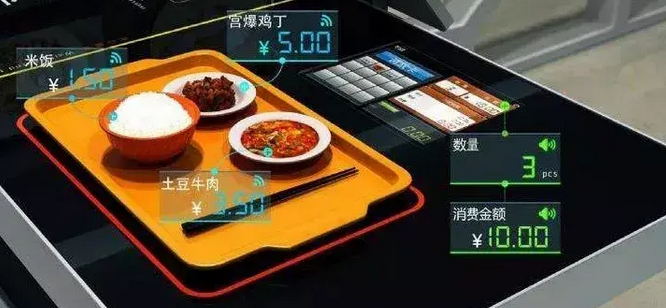
During lunchtime, elderly people queue up in front of a touchscreen computer at a day care center in New York, USA. The screen displays a wide variety of dishes, including meat and vegetables, with rich nutrition.
When an old man with diabetes chooses his favorite dishes, the computer program has limited the dishes that the old man can choose to the range of sugar free, light, and less oil that diabetic patients can eat. The screen also clearly displays the remaining empty seats and corresponding table numbers, as well as the names of the elderly who have already chosen to dine at this table.
Real time online query of shuttle vehicles for elderly people at home:
At present, many elderly care centers have installed tracking devices in their vehicles when transporting elderly people from home to and from the center to participate in activities. The purpose is to allow the elderly to access the internet and check the condition of the vehicle in real time while waiting for the vehicle, so that they can wait for the vehicle to approach their residence before going downstairs and boarding.
Using mobile application software (APP) can also achieve zero distance contact between the elderly and the outside world. Organize computer training classes to gradually expose the elderly to various electronic devices from scratch. In the elderly forum on the APP, elderly people can comment on the service quality of the center at home and communicate with other elderly people.
Environmental Assisted Living (AAL) System:
It refers to the use of modern sensing and transmission devices to intelligently connect various instruments in the home on a scalable intelligent technology platform, creating an instant response environment that analyzes the status and environmental objects of the household, and makes immediate judgments and responses.
Once the data analysis of the monitoring system shows that there are emergency situations such as falls, coma, or even difficulty breathing among the residents, a distress call will be issued and the designated emergency contact person will be contacted immediately.
Berlin ALL system covers residential areas in Germany:
In an office building in the Marcan district of Berlin, Germany, there is a model house covered with an 'environment assisted living' system. There are 'mechanisms' everywhere in the 140 square meter room.
Along the way from the bedroom to the bathroom and washroom, there are a series of long 'night vision lights' embedded in the corners of the wall to prevent the elderly from being dazzled by sudden lights in the middle of the night.
The top of the bedroom wall is equipped with an 'I' - shaped sliding groove and an automatic take-off and landing pole, which can allow elderly people with lower body paralysis to independently 'hang' themselves on the take-off and landing pole with both hands, 'hang' themselves from the bed to the wheelchair, or reach any place in the room.
In the bathroom and washroom, there are also auxiliary facilities for the elderly to support, pull, or sit or lie down, and help and alarm buttons can be seen everywhere.
The electronic alarm device in the living room is the core of AAL and serves as an auxiliary platform control center. The daily living situation of the elderly will be transmitted here through various sensors for comprehensive analysis. Even if the elderly open the medicine box to take medication, it will be recorded here.
Family members and caregivers can install applications on their mobile phones to remotely synchronize and query the elderly's life and activity data stored on the platform.
At present, the price of retrofitting AAL systems for ordinary households is still high. To enable more elderly people with average or even difficult economic conditions to enjoy this elderly care system at home, many charitable organizations are working on related projects. The relevant parties are cooperating with charitable foundations to carry out AAL system renovation of apartments for impoverished elderly people.
Technology makes life more convenient, and with the development and application of intelligent systems, elderly care will be more humane and convenient. The advanced elderly care technologies and successful management models of countries such as the Netherlands, the United States, and Germany may have reference and learning significance.

暂无链接


Address:405-408, 4th Floor, Hanrun Building, No. 19 Hongzehu East Road, Suqian City, Jiangsu Province
Tel:0527-81238018
Mailbox:657782290@qq.com
Post code:223801
Scan the QR code
Follow official account

手机扫二维码
关注公众号
Copyright ©2023 All Rights Reserved 江苏领航软件科技有限公司 版权所有 粤ICP备00000000号
Copyright ©2023 All Rights Reserved xxxx有限公司 版权所有 粤ICP备00000000号
 吴医师
吴医师